Sunday, March 31, 2019

Advantages of Rainwater Harvesting

http://www.architectsda.com
 
When rainwater is collected and stored into natural reservoirs or tanks in order to use the same for drinking, gardening or irrigation, then the technique is called 'rainwater harvesting'. One method is rooftop harvesting where rainwater is stored using tiles, plastics or metal sheets on the top roof of the building. This rainwater can provide households with drinking water and year-round storage. Rainwater harvesting is, therefore, the accumulation and storage of rainwater for reuse on-site, rather than allowing it to run off. Here are few advantages of Rainwater Harvesting:

Rainwater harvesting reduces the dependency on ground water, hence potable water is available even adverse situations like during droughts, floods, etc..

Rainwater harvesting can be particularly beneficial in those areas where the groundwater is contaminated with chemicals like pesticides, fluoride, or cancer causing compounds etc.
   
Rainwater harvesting techniques are easy to implement, easy to construct and maintain, and the also less investment is required.

Areas where the groundwater levels have gone down, rainwater harvesting can be an effective solution. With rainwater harvesting, one can quickly and easily reduce water consumption and become more efficient. By harvesting rainwater, you can cover up to 50% of a family’s typical household water usage – this translates into savings on bills whilst helping the environment.
   
Rainwater harvesting also reduces soil erosion conserves groundwater.

Thursday, March 28, 2019

The 'Green' Responsibility of Architects

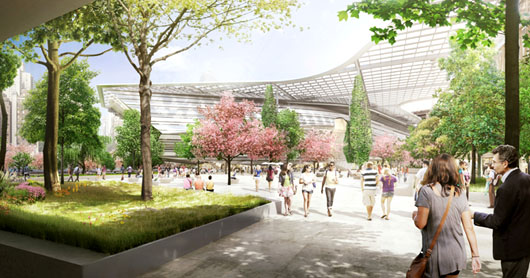
Green architecture is not just a technology but full of scope for creativity. An architect, however, with the help of modern technology can not only preserve the environment but better it. All of us must understand that that to preserve the environment, we need to change our perception of what our homes and industrial buildings should look like. We must, therefore, understand how to implement nature into our buildings rather than just creating a concrete structure. Architects should create buildings that are energy efficient, more green and adaptable to surroundings. The objective should be to make ecosystems healthier and lessen the pollution impact on the earth.

http://www.architectsda.com


All across the globe, there is a growing demand for green architecture or buildings that combines the elements of design and esthetics with sustainability and ecology. Architects must create environmentally aware designs and use energy efficient techniques in architecture. Tall buildings or residential building now have plants not only outside but continue throughout the building itself.

Green architecture is full of prospects. Architects, today (and in future) can minimize the negative environmental impact of their structures by combining their artistic vision with the modern technology and not only save the environment but improve it.

Design Atelier is one such architecture company that offers green buildings designs without compromising over esthetics. Based in New Delhi, the capital of India, the company firmly belives that green architecture is responsibility of architects. We must leave good marks on the earth and work with a thoughtful integrity and a contemporary sensibilities to create buildings with surrounding which are healthier and without pollution.

http://www.architectsda.com

Thursday, February 28, 2019

In Vadodara, Architecture students create artistic classroom to street children


http://www.architectsda.com/
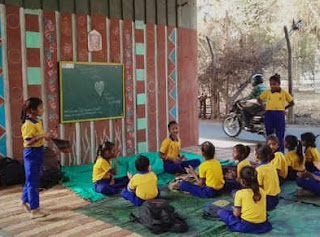
Recently in Vadodara, a group of architecture student spruced up the the space below the Lalbaug bridge to provide artistic classroom to street children. The faculty and other professionals belonging to the School of Architecture Art and Design (SAAD) of ITM Universe, MS university and other colleges too helped their students design creative space where street children can take regular lessons.

The efforts of these architecture students are now helping street children learn under the bridge in a revamped and painted classroom. Students of ITM SAAD are looking forward to such collaborative works so that they gift the city and its people at large.

The project was carried out in collaboration with Project Retrofit, a local street artist group in the city, which is using its skills to give better urban experience to the people of the city.

http://www.architectsda.com/

Friday, February 22, 2019

Top Green Buildings in India


http://www.architectsda.com/
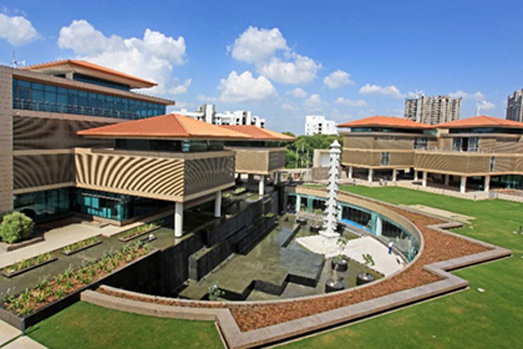
The government and real estate sector in India has acknowledged the benefits of green buildings and have started to implement the concept in their initiatives and projects. Since last few years, green buildings have been the norms in many government initiatives like Smart Cities Mission, Pradhan Mantri Awas Yojana (PMAY) and Atal Mission for Rejuvenation and Urban Transformation (AMRUT). Even the private players in real estate sector have been integrating the sustainable growth and energy-efficient concepts in their projects. Here is the list of few renowned (top) green buildings in India:

Suzlon One Earth, Pune

CII- Sohrabji Godrej Green Business Centre, Hyderabad

ITC Maurya, New Delhi

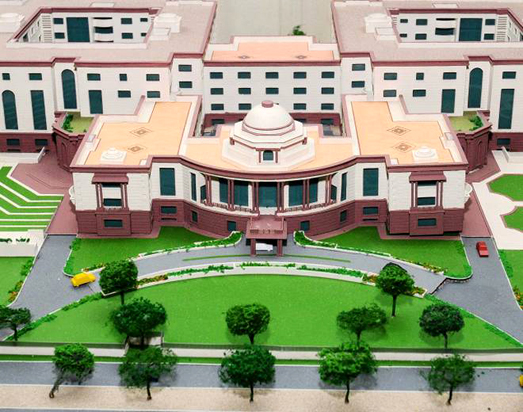
Jawaharlal Nehru Bhawan, New Delhi

ITC Green Centre, Gurgaon

Infinity Benchmark, Kolkata

The benefits of green buildings includes enhancing quality of life and cease problem of depleting natural resources. We need a large-scale of green and energy efficient buildings. A country like India where only 20 million square meters of area is covered by green buildings, the practice must be promoted. 
http://www.architectsda.com/

Thursday, January 31, 2019

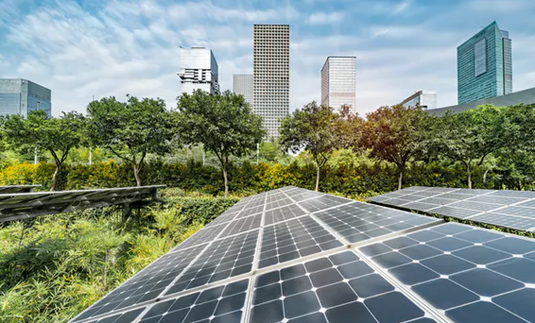
Green buildings must do more to reduce energy-related C02 emissions to zero


World over, the buildings are responsible for 40 percent of energy-related carbon dioxide (CO2) emissions and since 2010 the global building sector CO2 emissions are up 3 percent. Though this is a matter of concern, yet architects believe that buildings could be actually a possible solution to the climate crisis. Through sustainable measures and practice, buildings could not only greatly reduce their demand for energy, but could generate clean, renewable energy. If warming could be kept below 2℃, the built environment may become carbon-neutral by 2050.

The built environment industries which includes architects, engineers, designers and developers understand that though the concept of “green building” got into reality more than 30 years ago yet not enough has been achieved. It requires willpower policy, regulation and incentives in order to do more to fix our climate emergency.

Our planet has warmed about 1℃ since the 19th century and rising! If it rises to another degree, then it may push the civilization to the brink. According to the UN Intergovernmental Panel on Climate Change, urgent and unprecedented changes are required to reduce greenhouse gas emissions (GHGs) so that we avoid reaching 2℃. 

http://www.architectsda.com/


All attempt to reduce energy-related C02 emissions from buildings to zero must be taken with all our capacity.  Architecture2030.org, a U.S. based non-governmental organization, recently introduced the first national and international “Zero Code” building standard for new construction. It focuses on designing buildings with high energy efficiency that use no fossil fuels in their operation. The organization is working in California and China to put the policy into practice.

The performance of LEED-certified buildings (and those that are not yet certified) are evaluated against a proprietary dataset and given an “Arc score.” This process anchors our progress to a baseline number, not towards constructing unprecedented sustainable buildings.

Tuesday, January 29, 2019

2019 - The year of a green new deal?

http://www.architectsda.com/

Richard Murphy and Colin Hines have suggested a number of ways on how to raise revenue that could be used to fund energy efficiency in all buildings, renewable and local transport systems. They hope that this green new deal would also provide jobs in every constituency and dramatically reduce carbon emissions.

To deliver this 'green' will, Richard Murphy and Colin Hines writes in the guardian.com, require that people be convinced that they will benefit and that there is the money to pay for such a transformation. Also, taxes on the wealthy can be increased.

According to them these funding can be raised in many ways including private savings via “green war bonds”. Another mechanism would be to improve tax collection. Also, bank could purchase new debt issued in the form of green bonds by a national investment bank to fund energy efficiency in all buildings, renewable and local transport systems.
 
Murphy and Colin suggests to use quantitative easing to fund the transition to a sustainable economy. Read more

Friday, December 28, 2018

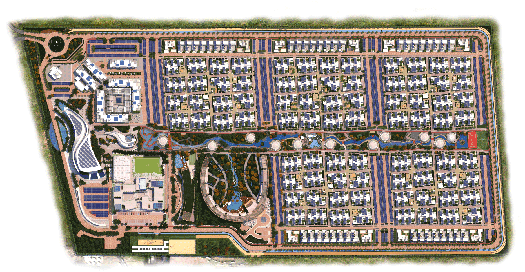
Dubai’s Impressive Sustainable City Housing Development


http://www.architectsda.com/

The Sustainable City, a housing development in Dubai with 3,500 people already living there and it's still not quite complete. Sustainable City is an amazing achievement. It is a stark lesson to building contractors the world over. It's not more expensive to build and it's remarkably cheaper and more efficient to live in. In fact, Sustainable City is the first operational net zero energy city in Dubai, modeled to become an international showcase for high quality sustainable living.

A new housing development,it recycles water and waste and produces more energy than it consumes. Further out in the desert, Dubai is building a giant solar power plant that will soon be producing some of the cheapest and cleanest electricity on Earth.

The UAE aims to have 75% of Dubai's energy come from clean sources by 2050. If the city pulls that off, it would have the smallest carbon footprint in the world.

Wednesday, December 12, 2018

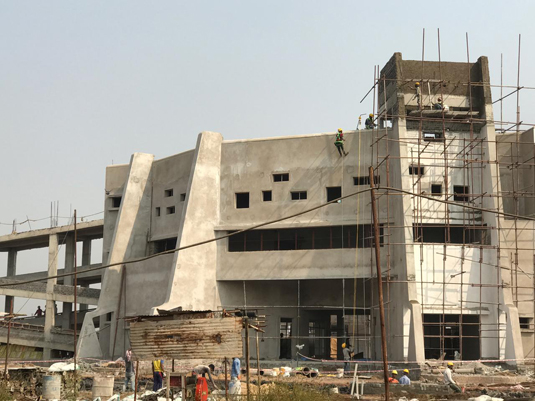
Watching a design on paper turn slowly into an expressive, dignified built form!

The pleasure of watching a design on paper turn slowly into an expressive, dignified built form is an experience which only a designer can under stand.

http://www.architectsda.com

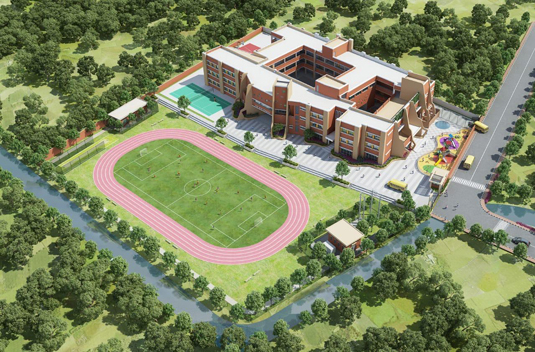
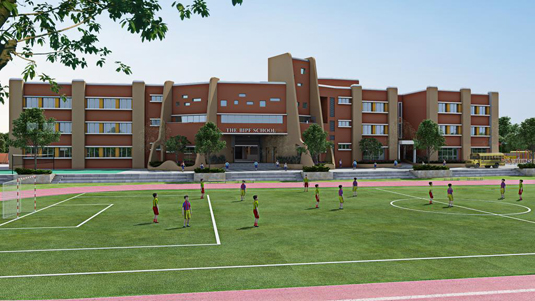
Even with the small land parcels we get, it is a joy to be part of a tradition in architecture that creates spaces of accommodation for children in small towns of India. The team vows to focus on diverse design solutions to offer the kids some space generosity but with a sense of order. One is always hopeful that with all the constraints, the program can yet drive an element of site sensitivity and make naturally lit open space inside and outside the building.

http://www.architectsda.com

"We want to leave good marks on the earth. We want to work with a thoughtful integrity and a contemporary sensibility because we want our buildings to be loved today and to last. We would measure our work by the pleasure of the lives lived in our buildings and projects," says Aashish V. Karode, the Principal - Design and Planning Services, Design Atelier.

http://www.architectsda.com


Friday, November 30, 2018

Electronic Voting Machines (EVM): A Green Initiative?

Way back in the year 1977, the then chief election commissioner (CEC) SL Shakdhar, during a tour of Hyderabad, requested the Electronics Corporation of India to study the feasibility of using an electronic device for conducting elections. In 1979, a prototype was developed and the following year, the Commission demonstrated how it worked to representatives of political parties. Today these machines are used in most of the elections in India. In the 2019 Lok Sabha elections, all voters will use EVMs.

http://www.architectsda.com/


Off late, there had been concern by few political parties, who alleged that these machines could be rigged! We will leave that aspect to the politicians but here we will discuss how using these machines could be termed as a green initiative by election commission!

EVMs spell good news for the environment as replace ballot papers, for which hundreds of tonnes of paper were used. According to some reports, during the last parliamentary election, 7,000-8,000 tonnes of paper were required to print ballots wherever needed. This meant the felling of 1.2 lakh fully grown trees. It is estimated that about 10,000 tonnes of paper will be saved through the use of EVMs in all polling booths.

“In the past few decades the Election Commission has progressively and successfully introduced many green initiatives, the most important of which is the use of EVMs, which has saved trees and paper to a large extent,” says former CEC N Zaidi. He also points to yet another environment-friendly move of the EC — the curb on noise pollution by regulating the use of loudspeakers in political campaigns.

Similarly, the Election Commission also wish that use of plastic should also be banned in election including political parties. The World Wide Fund for Nature-India, in a letter to the EC in 1999, had stated that it was “very perturbed over the excessive and non-sensible use of plastic by political parties”, which not only caused “choking of drainage systems in major towns and cities” but also contaminated agricultural fields.

Responding to the letter, the Commission wrote to all political parties, urging them not to use plastic for their posters and banners. (Source: BusinessLine)

Friday, November 23, 2018

Indian green building market to double by 2022

India’s green building market is estimated to double by 2022 at 10 billion sq ft, valuing around USD 35-50 billion. According to property consultant ANAROCK, "Though at a nascent stage, India has emerged as one of the leading countries in terms of green buildings’ projects. India ranks only second after the US in terms of the number of green technology projects and built-up area."

It is estimated that more than 4,300 projects with about 4.7 billion sq ft of built-up area had registered for green technology as of September 2017. This is only about 5 per cent of the total buildings in India, and hence there is huge potential for further penetration of green building technology.

http://www.architectsda.com/

Green building is the practice of using processes and technologies which are environment friendly and energy efficient throughout the building’s lifecycle from siting to design, construction, operation, maintenance, renovation and deconstruction.

The report said that the growth of green building in India would be driven by increasing awareness, environmental benefits, government’s support, subsidies and compulsions. The improving affordability is also a factor in the growth. The report also pointed out that countries with more population & limited resources that will to adopt green buildings’ practices faster.

LEED (USA), BREEAM (UK), DGNB (Germany) and CASBEF (Japan) are a few of the key global entities that define, categorise and certify green buildings across different countries. In India, IGBC and GRIHA define the green building norms.