Showing posts with label Green Building. Show all posts

Friday, July 26, 2019

Green buildings are profitable, cost-effective and good for the economy

Buildings account for over 40 percent of global energy-related CO2 and if we need to meet the meet global carbon reduction goals, then according to a IPCC report, we must ensure a “rapid and far-reaching” sustainable transition in land, energy, buildings, transport and cities. Green buildings, certified by LEED, actually offer a global solution for cities, communities and neighborhoods. The sustainable design of these building are reducing carbon emissions, energy and waste; conserving water; prioritizing safer materials; and lowering our exposure to toxins.

As per World Green Building Trends SmartMarket Report in 2018, the people associated with the building and construction industry expect the majority of projects in the next three years to be green buildings. Creating spaces that support health and well-being, as well as the economy and environment will accelerate sustainable development and deliver a better standard of living.

In the U.S., clients now not only demands healthier buildings but at the same time look at the economic benefits. This behavior of clients trigger growth of green buildings. Operating cost savings, shorter payback periods and increased asset value in new green buildings and green retrofits have been consistently reported.

According to an article published in new.usgbc.org, upfront investment in green building also makes properties more valuable, with a growing number of building owners seeing a 10 percent or greater increase in asset value. The percentage of owners reporting that level of growth has nearly doubled since 2012. Other benefits of green buildings, as explained in this article are:

Green buildings reduce day-to-day costs year-over-year. LEED buildings have reported almost 20 percent lower maintenance costs than typical commercial buildings, and green building retrofits typically decrease operation costs by almost 10 percent in just one year.

Green buildings are for every market and every community. A report on the Los Angeles market indicated that while traditional (non-LEED certified) buildings receive an average of $2.16/ft2, tenants were willing to pay $2.91/ft2 for LEED certified space.

The University of Texas at Austin looked at resale value on homes in the Austin-Round Rock Metropolitan Statistical Area and found that homes built to LEED standards between 2008-2016 showed an eight percent boost in value, while homes built to a wider range of green standards saw a 6 percent increase in value.

To-date, green building has created millions of jobs and contributed hundreds of billions of dollars to the U.S. economy. From 2011-2014, national green construction generated $167.4 billion in GDP. In Texas alone, more than 720,000 jobs were attributable to green construction during that time. In 2014, LEED-related employment directly contributed $1.09 billion of individual income tax to states.


Friday, February 22, 2019

Top Green Buildings in India


http://www.architectsda.com/
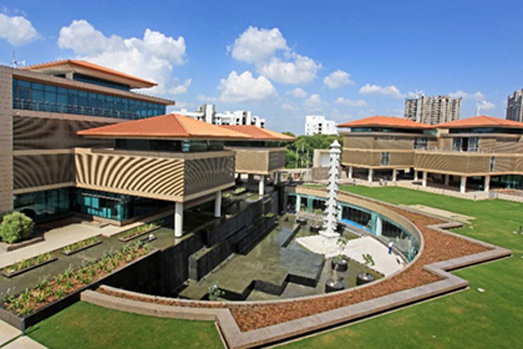
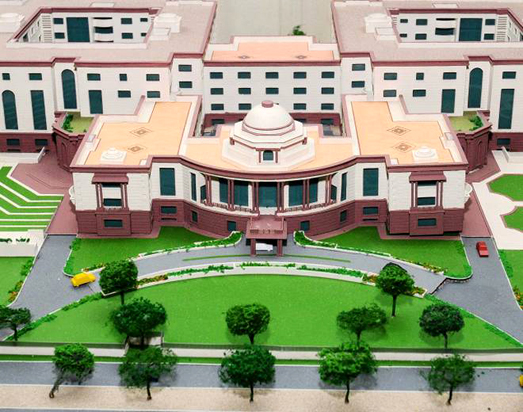
The government and real estate sector in India has acknowledged the benefits of green buildings and have started to implement the concept in their initiatives and projects. Since last few years, green buildings have been the norms in many government initiatives like Smart Cities Mission, Pradhan Mantri Awas Yojana (PMAY) and Atal Mission for Rejuvenation and Urban Transformation (AMRUT). Even the private players in real estate sector have been integrating the sustainable growth and energy-efficient concepts in their projects. Here is the list of few renowned (top) green buildings in India:

Suzlon One Earth, Pune

CII- Sohrabji Godrej Green Business Centre, Hyderabad

ITC Maurya, New Delhi

Jawaharlal Nehru Bhawan, New Delhi

ITC Green Centre, Gurgaon

Infinity Benchmark, Kolkata

The benefits of green buildings includes enhancing quality of life and cease problem of depleting natural resources. We need a large-scale of green and energy efficient buildings. A country like India where only 20 million square meters of area is covered by green buildings, the practice must be promoted. 
http://www.architectsda.com/

Tuesday, January 29, 2019

2019 - The year of a green new deal?

http://www.architectsda.com/

Richard Murphy and Colin Hines have suggested a number of ways on how to raise revenue that could be used to fund energy efficiency in all buildings, renewable and local transport systems. They hope that this green new deal would also provide jobs in every constituency and dramatically reduce carbon emissions.

To deliver this 'green' will, Richard Murphy and Colin Hines writes in the guardian.com, require that people be convinced that they will benefit and that there is the money to pay for such a transformation. Also, taxes on the wealthy can be increased.

According to them these funding can be raised in many ways including private savings via “green war bonds”. Another mechanism would be to improve tax collection. Also, bank could purchase new debt issued in the form of green bonds by a national investment bank to fund energy efficiency in all buildings, renewable and local transport systems.
 
Murphy and Colin suggests to use quantitative easing to fund the transition to a sustainable economy. Read more

Saturday, February 8, 2014

Solar is Green: Where to put Photovoltaic Panels?

The new 'mantra' is to build "zero energy" homes or offices. This can be achieved by combining green-building techniques with active solar systems. A "zero energy" building is one that produces as much energy as it consumes over the course of a year. Making use of solar energy using Photovoltaic Panels is at the heart of sustainable building. But it is important to understand that where should these Photovoltaic Panels placed.

A small amount of shade covering the panel can reduce the panel performance by 80%. Therefore, the most important point to remember is that when choosing a location for your Array is shading obstacles.


Find out which month has the least amount of sun on average. Determining this month is particularly important if you intend to use or constructing a system that will be used year-round. Similarly, if you want to use it for summer or winter, you will have to find month with least sun during months that you will use the system.

It is also very important to estimate the availability of sun and the cloud cover. Obtaining this information may be little difficult. Sometimes you can get this information on the web otherwise you may contact concerned authorities in you town/city.

You want to choose a location that is on or near the place where you loads will be. The array should be free of shade (during each month in use) from 9 am to 3 pm. This is the optimum time-frame a panel has to receive light and is called the “Solar Window".

Monday, March 4, 2013

Green building is the future of all building

Green building industry has grown at a very impressive rate and experts predict that it will continue to grow by as much as 400% in coming years. The motivation to build green also comes from the business opportunity it represents. Builders all over the world surveyed recently reported being involved in green construction on some level. Green building provides an assortment of economic advantages and therefore is the future of all building.

The impact of 'green' has united disciplines that have worked independently from one another, such as architects, engineers, builders, material suppliers, community planners, mortgage lenders and contractor trades. Many architecture and engineering firms have experienced that sustainable design projects were, on average 25% more profitable than conventional project. Some of the benefits that builders of green building enjoy are: 

- Competitive advantage because of higher quality
- Less construction waste
- Lower material and labor costs during construction
- Reduced purchase cost of mechanical equipment
- Reduced callbacks and warranty claims

Wednesday, January 9, 2013

The Effects of Modern Society on Architecture

Architecture reflects the religious, political and social values of the day. John Ruskin, once in his speech "Traffic", declared that a society's art and architecture directly reflects the morals and values of the people who dwell in and use its buildings.

It has always been said that the architecture is a product or mirror of the society and it also reflects the culture identity of the country. But do you think Modern Architecture still reflects our society?

The concern for environment and energy efficiency has created the need for 'Green' architecture. Green building (also known as green construction or sustainable building) refers to a structure and using process that is environmentally responsible and resource-efficient throughout a building's life-cycle: from siting to design, construction, operation, maintenance, renovation, and demolition.


The environment and energy efficiency are concerns of the modern society and these concerns have impacted the architects and modern architecture. Similarly, architecture has a central role to play in developing housing that meets the challenges of contemporary urbanism.

Tuesday, December 25, 2012

Green Buildings Gain Momentum in Indian Cities

The Indian cities have been plagued with numerous environmental problems because of increasing population, escalating economic development and migration from rural areas. The health and well-being of its residents, therefore, gets negatively affected. The demand for residential buildings which offers better environmental quality and have facilities that reduce environmental pollution and have provision for energy efficiency, water conservation and waste management processes are increasing.

The buildings in India consumes one-third of the country’s total electricity. According to BEE, lighting and air-conditioning use 80 per cent of the energy in commercial buildings, while fans and refrigerators guzzle maximum energy in residential buildings. The lifestyle of residents of cities have changed the electric appliance market. The National Habitat Standard Mission states that building energy consumption has increased from 14 per cent in 1970 to 33 per cent in 2004-05.

  
Green architecture ensures that the buildings are constructed in a way that the threshold level of water and energy requirements are low and waste is minimized, while the comfort level is improved. Now, there are enormous opportunities for innovation in energy-efficient technology and market, too, have taken notice of green building policies and thus abuzz with green building products for lighting, insulation and glazing.


Give attention to architect's advise before you select concrete blocks and vitrified tiles, plastering surfaces with cement and painting them. Green building is common sense and a mix of nature and modern science.

Thursday, November 8, 2012

India: Green building footprint to touch 2 billion sq ft by 2015

The concept of green buildings is gaining ground among developers of India and the Indian Green Building Council (IGBC) believes that green building footprint to touch 2 billion sq ft by 2015. According to IGBC, 1,745 eco-friendly building projects with over 1.21 billion sq ft of green footprint are registered with the council.

"Green buildings consume 40-50 percent less energy and 20-30 percent less water. Besides, the intangible benefits of green buildings include better indoor air quality, enhanced ventilation, better view and ample sunlight that significantly improve the productivity of the occupants," says Gurmit Singh Arora, vice chairman of IGBC Mumbai chapter.

Though the building cost of a green building may be marginally (3 to 5%) higher than the conventional building, but the incremental cost gets paid back within two-three years with substantial reduction in operational costs. Developers have realized the importance of the green concept as it also offers them a good financial business model.

Wednesday, March 16, 2011

Green Architecture - Environmentally Conscious Design Technique


Green Architecture, also known as Sustainable Architecture, is a growing trend throughout the world. This environmentally-conscious design technique is largely driven by certain goals and principles. The basic goals are:

- To reduce the impacts on the Earth from constructing buildings and their materials like embodied energy, pollutants, mining and harvesting.

- To reduce the occupancy related impacts like fuel use, land pattern disruption, maintenance etc.

- To reduce the impact of the structure at the end of its life (decaying in place or joining a landfill)

- Creating a more desirable human experience by using natural materials.

Green Architecture helps create or renovate the existing buildings in a way that they have a minimal impact on the environment. One of the primary goals of green architecture is to reduce to the amount of energy required to keep inhabitants comfortable. Similarly, the postion of building on a property can make a significant difference in energy efficiency. A building uses less energy if it generates its own. Green architecture designs often include the use of solar energy to supply most, if not all, of the electricity needs of the occupants of a home or office building particularly for heating hot water which is generally the biggest use of energy in a household.

Water efficiency is also one of the concerns of Green Architecture. It depends on water conserving fixtures like ultra-low flush toilets and low-flow showerheads. Green designs may include grey water systems that use waste water from laundry, dishwashing and bathing. The water can be recycled on-site for landscape irrigation or flushing toilets.

Wednesday, October 6, 2010

Goals of Green Architecture

The concept of Green Architecture can be traced to the energy crisis and the pollution concern in the 1970s. It may be assumed that the green building movement originated in the U.S. because of the need and desire for more energy efficient and environmentally friendly construction practices. Apart from the environmental reason, there are other motives to construct green buildings including economic and social benefits. The recent sustainability initiatives call for an integrated and synergistic design to both new construction and in the modification of an existing structure. This modern approach is called as sustainable design and integrates the building life-cycle with each green practice employed with a design-purpose to create a synergy amongst the practices used. On the other hand, the the aesthetic motive of green architecture is to design a building that is in harmony with the natural features and resources surrounding the site.

The practices and techniques in creating (or retrofitting of an existing structure) green building reduces and ultimately eliminate the impacts of new buildings on the health of human beings and the environment. The methods employed are using sunlight through passive solar, active solar, and photovoltaic techniques and creating green roofs using plants and trees. The provision of rain-harvesting in green building minimizes rainwater run-off.

The practice and technolgy may differ from location to location but there are certain fundamental principles that persist from which the method is derived. These are Siting and Structure Design Efficiency, Energy Efficiency, Water Efficiency, Materials Efficiency, Indoor Environmental Quality Enhancement, Operations and Maintenance Optimization, and Waste and Toxics Reduction. Similarly there are few universal steps in designing sustainable buildings: specify 'green' building materials from local sources, reduce loads, optimize systems, and generate on-site renewable energy.

Green building or sustainable building is the practice of creating structures and using methods that are environmentally responsible and resource-efficient throughout a building's life-cycle. The common goal of green buildings is to design a structure that reduces the overall impact of the built environment on human health and the environment by efficiently using energy, water, and other resources; protecting health of the occupants and improving employee productivity; and reducing waste, pollution and environmental degradation.

Many countries have already developed their own standards for green building or energy efficiency for buildings and others are busy evolving for themselves.

Saturday, August 21, 2010

New Directions for Living Roofs and Walls

The evolving technology of green roofs has been leading to the use of greater diversity in their designs. After years of implementing green roof designs, the international industry has seen a steady move towards more diversity in both elements of construction and plant materials. What is most fascinating of the improvement in green roof design is the use of plants on these roofs which, along with other naturally decomposing materials, aid in greater biodiversity. No longer are sedums the only plants that are being used on green roofs. At the EcoBuild Conference in London 2010, exhibits featured new green roof designs showing a greater use of ornamental grasses and other flowering plants including some bulbs.


Germany and Austria have been the leaders in green roofs for many decades now. In Linz, Austria, all new construction built after 1985 must have a green roof installed on it. The change has been remarkable. Green roofs and living walls are beneficial for our environment in reducing urban heat island conditions, reducing dust, cooling spaces, and habitat for several species in an urban.

Friday, July 23, 2010

A Case for Green Entrepreneurship

Improved performance in architecture and urban design could add considerable value, given that 60% of the power/water consumed is accounted for by cities and of that 60% of power by the air-conditioning of buildings.

Using conservative design methods, a potentially staggering impact on the power-water consumption of the country could result if effective ways are found to support change in products and processes across the built environment. Imagine if buildings could be designed to be used through the day without electrical lights, or to run air-conditioning needs on pre-cooled recycled water or to use all natural and paid resources conservatively and then say multiply this model to the entire city to gauge the impact.

Thursday, June 17, 2010

Newly opened "61" at Gurgaon, gets a " Green Signal"

The Preliminary Evaluation Report on our new opened Institutional Building project “61” @ Sector 44 Gurgaon, with the Indian Green Building Council's Evaluative checklist suggests, that we may shortly qualify for the Gold Standard Certification in the Core and Shell building Category with special points for Performance and Innovation in Energy Savings, Natural Light Utilisation, Passive Cooling and Insulation, thermal protection and Climate Responsive Design, and several other Green Building Criteria for excellence for Leadership in Energy and Environmental design.